SEO
Wild Atlantic Way 2026: what travellers search
The search terms, AI queries, and planning patterns driving 2026 Wild Atlantic Way bookings — and what tourism operators should be doing about it.
QuantElit Team
Digital Agency · Clifden
Published
Updated
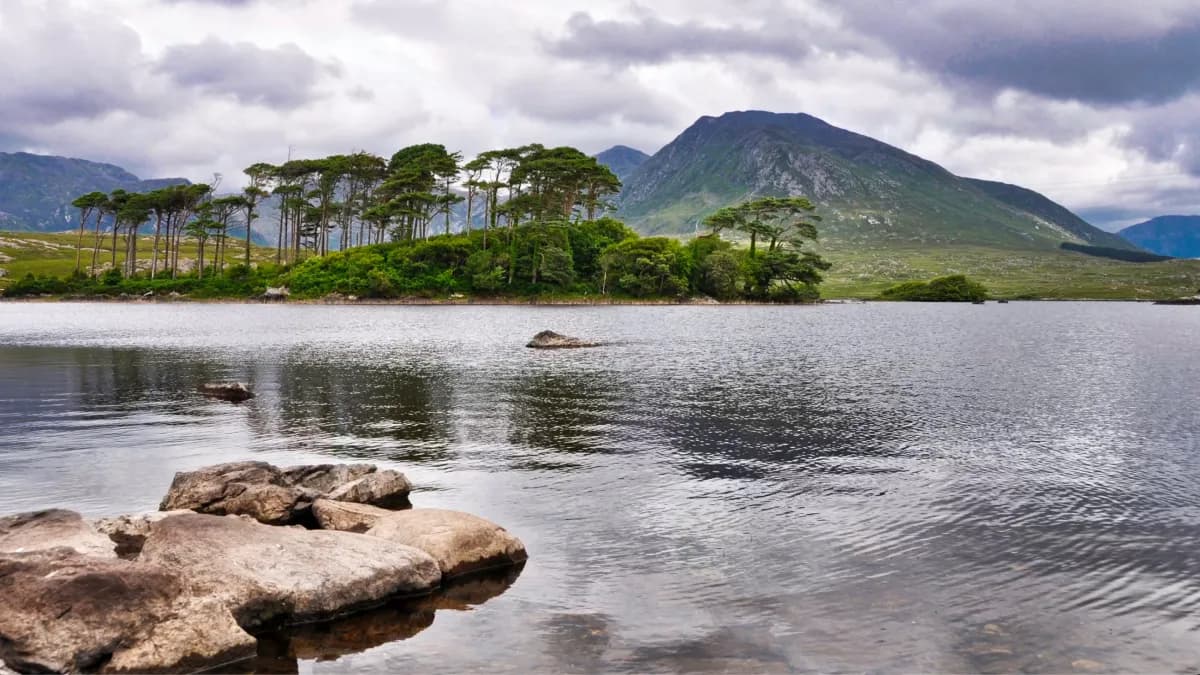
Imagine a family in Munich in February 2026, beginning to plan a summer Ireland trip. What do they search for? In what order? And who gets the booking at the end of it?
Understanding the 2026 Wild Atlantic Way planning journey — as the traveller actually experiences it — is the single most useful exercise a West-of-Ireland tourism operator can do. Most operators are still designing for a 2015 planning journey. The gap between the two is where visibility, bookings, and price-premium are quietly being decided.
How the Wild Atlantic Way planning journey looks in 2026
Drawing on Google Trends, Fáilte Ireland's overseas-visitor research, Tourism Ireland's market reports, and what generative AI assistants now surface for Wild Atlantic Way queries, the 2026 planning journey for international visitors breaks into four phases:
Phase 1 — Inspiration (months 4-6 before travel)
The traveller doesn't know where on the Wild Atlantic Way they want to go. They're researching at a regional level. Typical queries:
- "best of wild atlantic way itinerary"
- "connemara vs kerry for first time"
- "is ireland worth visiting"
- "wild atlantic way with kids"
- "ireland in october" / "ireland in may"
Who wins this phase: Content publishers. Travel blogs, Fáilte Ireland, Wild Atlantic Way, TripAdvisor, The Irish Times, regional tourism boards.
What individual operators can do: Contribute to this content layer. Get featured in regional editorial. Write your own content that ranks on specific long-tail queries — "Connemara with primary-age children", "Sky Road drive from Clifden", "walking in Connemara in March".
Phase 2 — Shortlisting (months 2-4 before travel)
The traveller now has a rough region in mind. They're building a shortlist of places to stay, eat, and visit. This phase is where AI assistants do the heaviest lifting in 2026.
Typical AI queries:
- "recommend a small guesthouse in Connemara for two people in June"
- "best restaurants clifden 2026"
- "wild atlantic way stops between galway and sligo"
- "dog friendly B&B in connemara"
Who wins this phase: Businesses cited by name in AI responses. These citations come from structured web content, review corpus text, and authoritative editorial — as we covered separately.
What individual operators can do: Be specifically citable. One-paragraph "what makes us specific" on the homepage. FAQ content that answers real questions. Presence on Fáilte Ireland listings. Editorial features in quality publications, not just social media posts.
Phase 3 — Decision (weeks 1-8 before travel)
The traveller has a shortlist. They're cross-checking between sources — AI recommendations, Google reviews, TripAdvisor, Instagram, and the operator's own website — before committing. Public hospitality research (Booking.com partner reports, Skift Research, Phocuswright) consistently shows decision windows running into the days-to-weeks range, with multiple cross-source visits — the booking is rarely a single-session decision.
This is where traditional SEO, Google Business Profile, and review text matter most.
Typical Google searches at this stage:
- "[business name] reviews"
- "[business name] booking"
- "[business name] parking"
- "[business name] breakfast"
Who wins this phase: Operators with a strong Google Business Profile, recent reviews, a fast and trustworthy direct-booking site, and coherent information across every channel.
What individual operators can do: Obsessively remove inconsistencies. Your address, phone, opening hours, and price range should be identical across every platform. Review response rate should be high, recent, and personalised.
Phase 4 — Booking and anticipation (last 2 weeks)
The traveller has booked. They're now planning the trip around the booking — dinners, day trips, drives. They're also second-guessing: "Did I choose right? What should I know before I arrive?"
Typical queries:
- "[town] things to do"
- "[town] weather in [month]"
- "drive from [airport] to [town]"
- "what to pack for ireland in [season]"
Who wins this phase: Operators who communicate well between booking and arrival. A pre-arrival email that includes driving directions, a packing note, a "one thing we'd definitely do" suggestion, and a quiet reminder of specific bookable experiences (dinner, a morning walk, a nearby activity) converts a booked guest into a higher-value, higher-reviewing one.
The queries that have exploded in 2025-2026
Seven specific search patterns have grown meaningfully in the last 18 months. If your content doesn't speak to any of them, you're behind.
1. "Slow travel" and "stay longer" queries
"4 days in connemara itinerary", "slow travel west of ireland", "week in clifden". Travellers increasingly stay in one place for 3-5 nights rather than bouncing daily. Your content should reflect this: "three days in Clifden", not "one-day stop on a road trip".
2. "Dog friendly" queries
Increasingly searched across Ireland, the UK, and Northern Europe. An explicit dog-friendly policy, stated clearly, is now a selection factor. If you are dog-friendly, say it on the homepage, not in the FAQ.
3. "Remote work" queries
"Wi-Fi in connemara B&B", "places to work remotely in the west of ireland". This is the underserved market from the shoulder-season article. A site that explicitly mentions speed-tested Wi-Fi, a proper desk, and a remote-work-friendly stay wins an almost uncontested lane.
4. "Sustainability" queries
"Eco friendly accommodation ireland", "sustainable hotel wild atlantic way". Booking.com retired its in-house sustainability badge in 2024 and now surfaces recognised third-party eco-certifications; Google also highlights sustainability attributes. An explicit, certifiable sustainability page — solar hot water, locally-sourced breakfast, refillable toiletries — is what gets you onto these, and most of your local competitors haven't done it.
5. "Accessible" queries
"Wheelchair accessible B&B ireland", "accessible wild atlantic way". An explicit accessibility page is both a moral and commercial improvement. Travellers who need accessibility information rarely find it on small-operator sites — and they book the ones that provide it.
6. "Food" queries, specifically
"Best seafood chowder clifden", "where to eat oysters connemara", "michelin restaurants west of ireland". Food has moved from one of many reasons to visit Ireland to the reason for a growing segment of travellers. Partnering with, or featuring, local food businesses on your site attracts this audience and builds the mutual-referral effect.
7. "With kids" queries
"Connemara with teenagers", "kid-friendly wild atlantic way", "B&B with family room connemara". Family travellers do detailed research, book longer stays, and repeat-visit at higher rates. A family-focused landing page with specifics — room configurations, kid-friendly activities, dietary flexibility — is under-supplied in the 2026 market.
What to do with this
Three concrete actions, in order of impact:
-
Audit your existing content against this journey. Does your site answer what Phase 1, 2, and 3 travellers are actually searching for? Most tourism sites answer Phase 4 questions (already-booked logistics) and ignore the earlier phases, missing most early-stage discovery.
-
Pick two of the seven growth search patterns and write content for them. One piece per pattern. Don't try to cover all seven — cover two deeply. Sustainability and remote-work are the highest-ROI pair for most small Connemara operators.
-
Measure. Set up Google Search Console properly (free, under an hour of work). Check every quarter which queries you're ranking for and which are bringing traffic. Adjust your next content piece based on what's working.
Where this fits
Visibility is the bridge between what you do and who knows about it. The operators winning the 2026 Wild Atlantic Way market have identified who their ideal traveller is, figured out what that traveller is searching for, and built content and listings that meet the traveller at each stage of planning. None of this is glamorous. All of it builds.
Sources
The query patterns and seasonality observations above lean on public search and tourism data. For deeper context on the Wild Atlantic Way visitor economy:
- Wild Atlantic Way official site — Tourism Ireland's branded visitor portal.
- Fáilte Ireland — Research & Insights — visitor data, accommodation reports, and regional facts & figures.
- Tourism Ireland — Research & Insights — overseas-market visitor research.
- Google Trends — search-volume movement for tourism queries.
Frequently asked questions
- How do international travellers plan a Wild Atlantic Way trip in 2026?
- In four phases: Inspiration (four to six months out, researching at a regional level), Shortlisting (two to four months out, where AI assistants do the heaviest lifting), Decision (one to eight weeks out, cross-checking reviews, Google Business Profile, and the operator's own site), and Booking-and-anticipation (the last two weeks, planning around the booking). Most small operators only answer the last-phase logistics questions and miss the earlier discovery stages.
- Which new search patterns should Wild Atlantic Way operators target?
- Seven have grown meaningfully: slow-travel and stay-longer queries, dog-friendly, remote-work, sustainability, accessibility, food-specific, and travelling-with-kids queries. The advice is to pick two and cover them deeply rather than thinly attempt all seven — sustainability and remote-work are the highest-return pair for most small Connemara operators.
- Do travellers book in a single session?
- Rarely. Public hospitality research from Booking.com partner reports, Skift, and Phocuswright shows decision windows running into the days-to-weeks range, with multiple visits across AI recommendations, Google reviews, TripAdvisor, and the operator's own website. Keeping your address, phone, opening hours, and price range identical across every platform is what holds up under that cross-checking.
- How do I find out which search queries bring me traffic?
- Set up Google Search Console — it is free and takes under an hour — and check every quarter which queries you rank for and which actually bring visits, then base your next piece of content on what is working. It is the single most useful free measurement tool for a small tourism site.
Time for more visitors. More bookings. More growth.
We listen to your goal, your team, your budget — and share how we would approach the work.
Book a free call
or email hello@quantelit.com
Keep reading
More ideas you can use today.
Tactics, trends, and tools other tourism owners are already applying — picked for what's relevant to this article.
- SEO
Google Business Profile for Irish tourism in 2026
Ten Google Business Profile changes that moved the needle in 2025 — and how to apply them as an Irish tourism operator in 2026.
- AI Visibility

Get your B&B recommended by ChatGPT and Gemini in 2026
What AI assistants actually look at when someone asks them to recommend a place to stay in Connemara — and how to get mentioned.
- Experience
How the best businesses turn places into destinations
What Ireland's Ancient East — EPIC, the Guinness Storehouse, and Newgrange — shows small tourism operators about turning a place into a destination.