AI Visibility
Get your B&B recommended by ChatGPT and Gemini in 2026
What AI assistants actually look at when someone asks them to recommend a place to stay in Connemara — and how to get mentioned.
QuantElit Team
Digital Agency · Clifden
Published
Updated
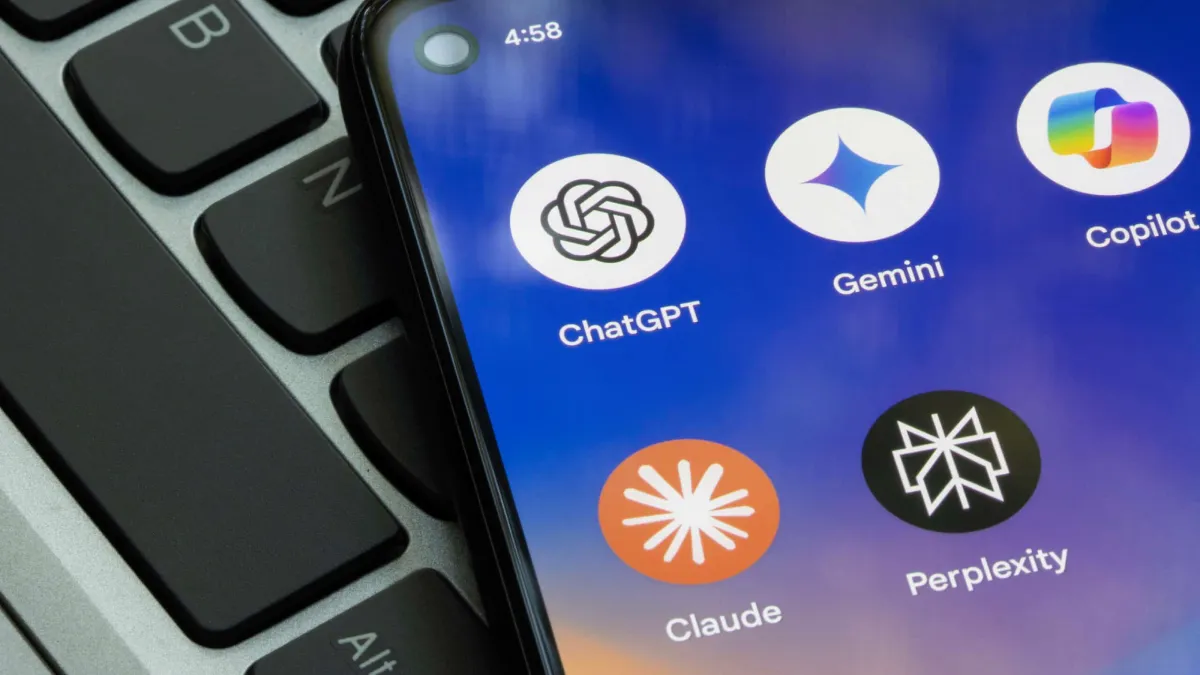
Three years ago, a traveller planning a week in Connemara opened Google. In 2026, they open ChatGPT.
"I'm travelling to the West of Ireland in September with my partner. We want somewhere small and quiet with good food nearby. Budget €150–200 per night. Any recommendations?"
The answer they get is increasingly a real recommendation. Not a SERP page, not an ad — a short list of three or four specific names, each with a sentence explaining why. If your business is one of those names, you get a booking. If it isn't, you don't — and unlike Google, there is no page two to scroll to.
This is a different game with different rules. Here's how to play it in 2026.
Where the assistants get their answers
Each major AI assistant draws from a slightly different blend of sources in 2026:
- ChatGPT (Search mode) — a live web index powered primarily by Bing, plus OpenAI's own ranking. Cites a handful of sources on click.
- Gemini — grounded directly in Google Search and Google Maps, so almost everything that works for your Google Business Profile also works here.
- Perplexity — live web, heavily weighted toward authoritative domains (Wikipedia, official tourism boards, quality editorial) with strong citation preference.
- Claude (with web search) — mix of Brave Search and Anthropic's training corpus; behaves most like a careful researcher.
The common thread: they cite what they can verify, and they verify by cross-referencing a claim across multiple independent sources.
The citation layer: what AI actually reads about your business
When an AI is asked "best B&B in Clifden for couples" in 2026, it is not making a holistic judgement. It is running a search, scanning the top 10–20 sources, and synthesising.
The sources that weigh the most:
- Your own website, if its content is structured and extractable (clear H1/H2s, FAQ schema, address in text not just footer)
- Your Google Business Profile description
- Fáilte Ireland and discoverireland.ie listings
- Wild Atlantic Way and Ireland's Hidden Heartlands pages
- TripAdvisor, Booking.com, and Google reviews — especially the text of reviews
- Local editorial — Irish Times travel, RTÉ, Independent, regional tourism blogs
- Wikipedia, if the town or region has a detailed page
Notice what's missing: Instagram, TikTok, Facebook. Social platforms are heavily walled off from AI crawlers. They're good for humans, poor for machines.
The six things that make you citable
1. A "What makes this place specific?" paragraph on your homepage
Assistants look for distinctiveness. A paragraph that starts "We are a four-room guesthouse on the Sky Road, ten minutes' walk from Clifden town centre, serving porridge made from Derrigimlagh oats and a single tasting-menu dinner on Friday and Saturday nights." is gold. A paragraph that starts "Welcome to our beautiful guesthouse in the heart of Connemara" is invisible.
Specificity is the single biggest differentiator. Specific facts are citable. Adjectives are not.
2. FAQ content in plain language
Plain-language FAQ content is one of the most extractable formats for AI answers — each question is a discrete, quotable unit, and the FAQ content matters more than the schema markup. Aim for 8–15 FAQs on your site, each answered in 2–4 sentences, covering: location, facilities, dietary requirements, accessibility, check-in, parking, dogs, children, season, what's nearby.
Our own FAQ (/faq) is structured exactly this way.
3. Real addresses in HTML text
Street address in the footer as plain text, in a <address> element, matching the address in your Google Business Profile exactly. Not as an image. Not only in a map embed. Consistency across every source is how the AI disambiguates you from a similarly-named business elsewhere.
4. Author-attributed content
Blog posts and service pages without an author byline look less trustworthy to AI citation systems. Add an author name and a short "About the author" line. This is a 2025 change; we expect it to become more important in 2026.
5. LocalBusiness schema (JSON-LD)
Structured data is the language AI engines speak most fluently. A LocalBusiness schema block with address, geo coordinates, opening hours, price range, and service area makes your business an entity the AI can reason about — a structured record with verifiable fields, citation-ready.
6. Third-party corroboration
If the only place an AI can verify a claim about you is your own website, the AI treats it with scepticism. Get listed on discoverireland.ie, Wild Atlantic Way partner pages, and — for hospitality — at least one quality editorial review (local newspaper travel section, regional tourism blog, a well-regarded food guide). Corroboration is the silent ranking factor.
The experiment you can run today
Open ChatGPT. Type: "Recommend a B&B in [your town] for a couple in September 2026. Budget €150–200 per night."
Read the response carefully. Three questions:
- Are you in the list?
- If yes, is the description accurate — or does it mention something you don't offer?
- Which businesses are listed, and what do their websites have that yours doesn't?
Repeat on Gemini and Perplexity. The patterns repeat. Competitors that are cited everywhere usually have three things your site doesn't: specificity, structured FAQ content, and third-party corroboration.
A realistic roadmap
If you want to be cited by AI assistants in 2026, the sequence we recommend is:
- Month 1: Audit what AI says about you today. Fix the highest-impact factual errors by updating your own site, GBP, and TripAdvisor listings.
- Month 2: Add FAQ content (and FAQ schema) to three core pages.
- Month 3: Rewrite your homepage and About page with specific, unique facts — no filler adjectives.
- Month 4–6: Pursue one editorial feature, one Fáilte Ireland listing update, and one high-quality regional blog placement.
By month six, the businesses that execute this fully are the ones AI engines have the most material to cite — content that's distinctive, structured, and corroborated. It's a long game, but it's a short queue — most competitors aren't running it yet.
The honest caveat
AI visibility is never a guarantee. No agency can promise a specific mention in a specific assistant for a specific query — the models update, the training corpora change, and a given answer varies between sessions. What we can say with confidence: the businesses that are citable somewhere reliably show up somewhere relevant, and that exposure builds over time as content and citations accumulate.
Sources
For deeper reference on the structured-data and AEO/GEO patterns referenced above:
- Schema.org — vocabulary spec for the structured data AI engines parse.
- Google Search Central — Structured data — Google's canonical reference for rich-result-eligible schema.
- llmstxt.org — the proposed llms.txt standard. Adoption is early and unconfirmed by the major AI engines, which still parse your HTML directly — treat it as low-cost, not a ranking lever.
Frequently asked questions
- How long does it take to start showing up in ChatGPT or Gemini answers?
- Schema and Google Business Profile signals can be picked up in 2–6 weeks. AI assistants weight reviews and editorial citations heavily, so the cumulative effect typically becomes visible 3–6 months after structured data, GBP optimisation, and a steady review flow are in place. AI assistants don't crawl on a fixed schedule — they re-index when their search-partner index refreshes (Bing for ChatGPT, Google for Gemini).
- Do I need a separate page for AI assistants, or does my normal website work?
- Your normal website works — but it needs structured data (schema.org Hotel, BedAndBreakfast, or LodgingBusiness JSON-LD), an answer-first FAQ section, and a clear positioning sentence in the page copy. AI assistants extract these from the same HTML a human reads. Don't build a parallel 'AI page'; make the public site machine-readable.
- Which schema.org types matter most for tourism in 2026?
- For accommodation: LodgingBusiness (or Hotel / BedAndBreakfast subtype) with priceRange, starRating, amenityFeature, and image. For activities and tours: TouristAttraction or Service with provider, areaServed, and offers. Always pair with LocalBusiness (NAP), FAQPage on the FAQ page, and Article on blog content. Stable @id values across the graph let AI engines merge mentions into one entity.
- Will AI assistants ever recommend my B&B without me doing anything?
- Sometimes — if you have an unusually strong public footprint (Fáilte Ireland listing, abundant Google reviews with location-specific language, editorial coverage in Irish Times / Lonely Planet). For most independent operators, passive visibility is unreliable. Structured data plus a maintained Google Business Profile is what makes recommendations consistent rather than accidental.
- How do I check whether AI assistants are recommending my business?
- Run quarterly probe queries directly: 'Recommend a B&B near Clifden for €150 a night', 'Where should I stay on the Wild Atlantic Way with my partner', 'Best small hotel in Connemara'. Test in ChatGPT, Gemini, Perplexity, and Claude. Note which businesses get cited and what evidence (review snippets, GBP categories, third-party listings) the assistants reference. QuantElit's Ongoing Growth retainer includes a quarterly AI visibility check across these four assistants.
- Is AI visibility different from SEO?
- Overlapping but distinct. Classic SEO optimises for ranking on a search-results page — keyword density, backlinks, technical performance. AI visibility (Generative / Answer Engine Optimisation) optimises for being named in a synthesised answer — entity clarity, structured data quality, review volume and quality, citation graph. A site can rank #3 on Google for 'B&B Connemara' yet never get cited by ChatGPT, and vice versa. The fix is to do both — and they share more than 60% of the underlying work.
Time for more visitors. More bookings. More growth.
We listen to your goal, your team, your budget — and share how we would approach the work.
Book a free call
or email hello@quantelit.com
Keep reading
More ideas you can use today.
Tactics, trends, and tools other tourism owners are already applying — picked for what's relevant to this article.
- SEO
Google Business Profile for Irish tourism in 2026
Ten Google Business Profile changes that moved the needle in 2025 — and how to apply them as an Irish tourism operator in 2026.
- Strategy
Why AI is changing how customers choose
How AI assistants like ChatGPT are changing the way travellers choose tourism businesses — and the three things that matter most right now.
- Strategy

The Browsing stage: where a Wild Atlantic Way trip begins
A Wild Atlantic Way trip begins long before the search bar — in the Browsing stage. What gets a tourism business onto a traveller's shortlist.