Strategy
The Browsing stage: where a Wild Atlantic Way trip begins
A Wild Atlantic Way trip begins long before the search bar — in the Browsing stage. What gets a tourism business onto a traveller's shortlist.
QuantElit Team
Digital Agency · Clifden
Published
Updated

A traveller's Wild Atlantic Way trip does not begin at a search bar. It begins months earlier, on a sofa in Munich or Manchester or Maynooth, when someone scrolls past a 12-second video of a fire-lit evening in Clifden and thinks, quietly, I'd like to be there. No destination chosen yet. No dates. Just a place that landed.
That moment is the Browsing stage — the first of the six stages in the Guest Journey we map on Online Presence work: Browsing, Searching, Comparing, Booking, Experiencing, Remembering. Each stage asks something different of a tourism business. The Browsing stage asks one thing: can a stranger encounter you, with no intent to book, and still put you on a list?
This is where the trip actually begins, and where most small Wild Atlantic Way businesses are invisible — not because they do anything wrong, but because they think the work starts at the website. It starts earlier.
What the guest is actually doing
In the Browsing stage the traveller has no business name in mind. They are absorbing, not deciding. They scroll a feed, half-watch a reel between other tasks, glance at a friend's holiday photos, let an algorithm show them "places like the ones you've looked at before."
Three things are true about this guest:
- They are not searching yet. A Google query comes later, in the Searching stage, once a region or a shortlist exists. Right now there is no query to rank for.
- They are pattern-matching on feeling. They are deciding whether a place feels like the trip they want — slow, wild, warm, social, remote — long before they compare prices or read reviews.
- They remember specifics, not generalities. Another sunset over the Atlantic blurs into the thousand they've already seen. A named moment — the eight-o'clock light through one dining-room window, woodsmoke on a particular afternoon — sticks.
The Browsing stage is the moment a place gets onto a list. Tourism marketing research has long described a "dreaming" or inspiration window in which travellers gather impressions months before they book — which is exactly where this stage lives.
What the owner needs to show
What earns a place on the list is a story-driven asset that travels — a 12-second drone shot, a photo of a signature moment, a one-line caption a stranger can repeat. The Browsing-stage currency is shareable specificity.
Concretely, the assets that do this work are:
- A named moment, captured. One specific, repeatable moment the business owns — built first as an Experience Design choice, then photographed. This is the difference between "a nice B&B" and "the place with the morning light over the bay."
- Photo, video, and drone shoots built around that moment, not around the building. A drone pass over a specific stretch of Connemara coast, a short video of the signature arrival, a detail shot of texture and warmth — assets made to move through a feed, not to fill a brochure.
- A line a stranger can repeat. The caption matters as much as the image. "Breakfast at the window, eight o'clock, before the road wakes up" travels; "Welcome to our family-run guesthouse" does not.
QuantElit designs the assets that travel; the owner runs the channels they travel on. The Browsing stage is won by the asset, not by posting frequency — one strong, specific piece outperforms ten generic ones.
Where the moment gets lost
Most small Wild Atlantic Way businesses have the raw material for a brilliant Browsing-stage presence and lose it in predictable places.
The most common is shooting the building instead of the moment. A wide, well-lit photo of a pretty stone exterior is pleasant and entirely forgettable, because a hundred other places have one. The asset that travels is the one nobody else can copy — the specific ritual, the specific light, the specific hour.
The second is treating the Browsing stage as the website's job. The website serves the later stages, when a guest already knows the name and wants to compare and book. In the Browsing stage there is no website visit yet — the guest is somewhere else entirely, and the business has to travel to them.
The third is spreading thin. A business present weakly on five platforms, posting whatever the week produced, sends a quiet signal of "ordinary." A business with one or two genuinely strong assets, placed well, reads as a place with a point of view.
What good looks like
A Wild Atlantic Way business winning the Browsing stage looks like this:
- It has two or three story-driven assets it is proud of — a hero video, a signature-moment photo set, one drone pass — each built around a specific named moment the place owns.
- Those assets are specific enough to be unmistakable and shareable enough to be passed on by a past guest without a caption rewrite.
- The same named moment carries forward into the later stages: it shows up in Google and AI-assistant answers during the Searching stage, on the homepage in the Comparing stage, and in the post-visit story in the Remembering stage. One moment, carried across the whole journey.
- The owner runs the channels with confidence because the underlying assets are strong enough to do the heavy lifting.
The compounding effect matters: a strong Browsing-stage asset keeps travelling after it's made, shared by guests and resurfaced by algorithms, so the work keeps paying out long after it is made.
What to fix this week
Three actions, in order of impact, for an owner reading this between guest check-ins:
-
Name one moment. Walk your own stay as a guest would and find the single moment that is yours alone — a light, a ritual, a view, a first drink. Write it in one line a stranger could repeat. (This is the start of Experience Design, and it costs nothing to do today.)
-
Capture it properly once. Shoot that one moment in good light — phone is fine to start — and get one strong vertical video and three strong stills. If a wider asset library makes sense, that is where a planned photo, video, and drone shoot earns its place.
-
Lead with it everywhere a stranger browses. Make the named moment the first thing on your most-scrolled channel, not buried three posts down. One specific asset at the front does more than a week of general posts.
Where this fits
The Browsing stage is where the trip begins, and it sets up everything after it. A guest who lands on your named moment in the Browsing stage arrives at the Searching stage already half-decided, ready to search for you by name. Get the first stage right and every later one gets easier.
It is also the most under-built stage for small Wild Atlantic Way businesses, which makes it the cheapest place to win. The assets that travel are specific, repeatable, and entirely within reach.
If your Browsing-stage assets aren't pulling their weight yet, the free call is the next step. We listen to your goal, your team, your budget, and share how we would approach the work.
Sources
The inspiration-window and discovery-behaviour patterns above draw on public tourism research:
- Fáilte Ireland — Research & Insights — overseas-visitor research and inbound tourism performance.
- Tourism Ireland — Research & Insights — overseas-market visitor and inspiration research.
- Skift Research — State of Travel reporting on discovery and planning behaviour.
This is the first in a series walking the Guest Journey stage by stage — Browsing, Searching, Comparing, Booking, Experiencing, Remembering.
Frequently asked questions
- What is the Browsing stage in the Guest Journey?
- Browsing is the first of the six Guest Journey stages QuantElit maps for tourism businesses — Browsing, Searching, Comparing, Booking, Experiencing, Remembering. It is the moment, often months before any booking, when a traveller is scrolling without a destination in mind and a place gets onto their mental shortlist. The guest is not yet searching for a business by name; they are absorbing images, short videos, and one-line stories that make a corner of the Wild Atlantic Way feel worth visiting. Winning the Browsing stage means having assets that travel into that scroll and earn a place on the list.
- How do guests find a Wild Atlantic Way tourism business before they search?
- Before a traveller types anything into Google, they encounter the West of Ireland through content that moves on its own: a 12-second drone shot of Sky Road shared by a past guest, a photo of a signature breakfast moment in Clifden reposted by a friend, a reel of a fire-lit evening in Connemara surfaced by an algorithm. This is the Browsing stage. The business that owns story-driven assets — photo, video, and drone shoots built around a specific, repeatable moment — gets carried into more of those scrolls and onto more shortlists.
- Do I need to be on every social platform to win the Browsing stage?
- No. The Browsing stage is won by the quality and specificity of the asset, not the number of channels it sits on. One strong story-driven asset — a named moment shot in good light, captioned in a line a stranger can repeat — travels further than ten generic posts spread across five platforms. QuantElit designs the assets that travel; the owner runs the channels they travel on. For most small Wild Atlantic Way businesses, doing one or two channels well beats being thinly present everywhere.
- What kind of photo or video actually travels in the Browsing stage?
- Assets travel when they are specific and repeatable. A wide generic landscape that could be anywhere on the Wild Atlantic Way is forgettable; a named moment that belongs only to one business is shareable. Think the eight-o'clock light at a particular dining-room window, a signature arrival drink by the fire, a drone pass over a specific stretch of Connemara coast at golden hour. The Experience Design layer names that moment first; the photo, video, and drone shoot capture it; the Online Presence layer carries it across every surface a future guest browses.
- Is the Browsing stage the same as advertising?
- No. Advertising buys attention for a fixed window; the Browsing stage earns it through assets that keep travelling after the spend stops. A well-made story-driven asset is shared by past guests, resurfaced by algorithms, and quoted in AI assistant answers long after it was made. Paid promotion can give a strong asset its first push, but the decisive variable in the Browsing stage is whether the underlying content is specific and shareable enough to keep moving on its own.
Time for more visitors. More bookings. More growth.
We listen to your goal, your team, your budget — and share how we would approach the work.
Book a free call
or email hello@quantelit.com
Keep reading
More ideas you can use today.
Tactics, trends, and tools other tourism owners are already applying — picked for what's relevant to this article.
- SEO
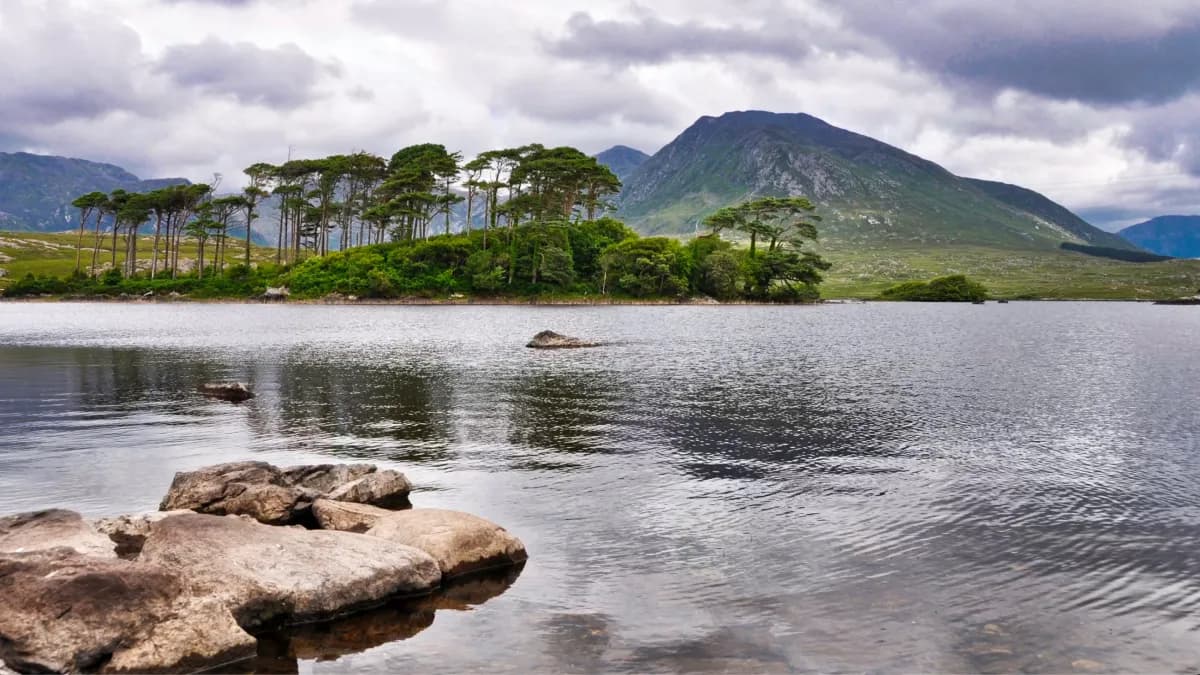
Wild Atlantic Way 2026: what travellers search
The search terms, AI queries, and planning patterns driving 2026 Wild Atlantic Way bookings — and what tourism operators should be doing about it.
- AI Visibility
Get your B&B recommended by ChatGPT and Gemini in 2026
What AI assistants actually look at when someone asks them to recommend a place to stay in Connemara — and how to get mentioned.
- Experience

Experience Design for Wild Atlantic Way tourism
The named moment, sensory layers, service ritual, and every-channel carry — the four-pillar Experience Design model for Irish tourism businesses.